

Monthly Archives: February 2012

Home Security 101 – Designing Your System


How do you design the right system to begin with? There are plenty of options out there, and it can be confusing. There’s really no mystery to good alarm system design – and with today’s technology, a little basic information and some common sense is all you need.

What you Need to Know – the Top Ten

  1. Wireless cellular monitoring. Cellular monitoring is the core of every safe and reliable alarm system. With features such as “Smash and Grab” protection it provides you with the finest in protection.
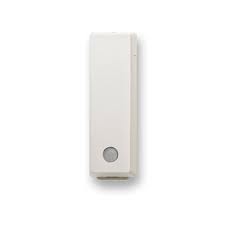
  2. Wireless sensors. They work, and they are the easiest (and most convenient) way to protect your home or business. You can add to your system at any time, move them or even move the entire system. Plus, they allow pre-programmed systems to be self-installed, which will eventually be the norm.
  3. Start with your exterior doors. Almost 60% of burglaries happen through the front or back door, and when you add in the garage, the total is two thirds of every forced entry. Clearly this is the place to start your design – and don’t forget your basement, or that door from the garage into your house. Having good locks (and using them!) should go without saying.
  4. Windows – basement and first floor. First floor windows are next in line behind the front door as points of illegal entry: 23% of burglaries happen through a first floor window. What’s even scarier is how many of these windows are not even locked! Start with sensors at the back and side windows of your house first, as they are generally the most vulnerable, with less illumination and less visibility from the street. Think about the windows you consider the most easily accessible and the most hidden – that’s how the bad guys think!
  5. Decide how you are using the system. Here’s where we need to remember the “Stay” and “Away” modes on your system. The Burns & McBride Smart, Safe Home system allows both ways to arm the system, and the way you are going to use the system will determine not only which mode to use, but also which sensors you select
  6. Work up from the basement. If you don’t have a basement, then it’s simple. But if you do, remember that those doors and windows are also vulnerable. Finished basements may be treated just like the first floor, while unfinished basements may allow a simpler solution – like a motion sensor. When you get to the second floor, you can usually relax – the incidence of entry above the ground floor is extremely low, unless there is a low roof, or stairway that provides easy access.
  7. Think about your pets. Pets are an important alarm system design consideration. Your large dog with the run of the house during the day probably means that you won’t arm your motion sensors, so you may need more window sensors or glass break sensors. Also, pets are a really good reason to make sure you have monitored smoke/heat sensors. My dogs are clever, but they do not dial 911 very well!
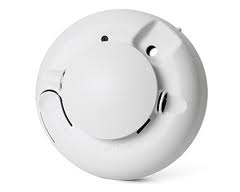
  8. Speaking of fire monitoring… we strongly recommend at least one monitored smoke/heat sensor with every system. They cost about $100, and what’s more important – there is be no additional monthly charge for fire monitoring. Also, be sure to get the maximum discount from your insurance company for a monitored system – even more savings with fire monitoring.
  9. Environmental sensors. We just wrote about the nasty lesson a friend learned from the flood in their office – so make sure you add those sensors for carbon monoxide, water/flood, and low temperature. Again, there is be no additional monthly charge for adding these.
  10. Thermostat – Our Smart Thermostat helps to pay for your monthly monitoring fee with energy savings. This is a very important part of any interactive home management system.

All of these design components will  work best when you have a system with interactive monitoring capabilities. With interactive features, you not only have the confidence that comes with professional monitoring, but also the added benefits of remote arming, text and email notifications from your system, and even special free apps for your iPhone, BlackBerry, or Droid device. Burns & McBride Home Comfort, a  leader in interactive, wireless security systems, specializes in these interactive services.

For more information on this exciting product call us at 302-656-5110 or visit our website at http://www.burnsandmcbride. Finally you might want to follow our blog at http://www.burnsandmcbrideblog.com. Just as Smartphones are adding applications and changing every day so to with the technology behind our Smart, Safe home system. Our blog explains some of the constantly changing things that are happening in the industry and we hope that you find it informative.
Leave a comment

Filed under Energy Management, Home Safety, Home Security, Home Security 101, Uncategorized

Water, Water Everywhere


Here’s a story for you

A friend of ours had recently spent quite a bit of money renovating their office. Over the weekend the dishwasher hose in the kitchen broke. The water ran for the entire weekend, flooded the office ruining all the carpets and caused nearly $100,000 in damages. It could just as easily been a homeowner’s second floor washing machine causing water damage

How could he have prevented it?

The Burns & McBride Smart, Safe Home system can have a “Home Disaster” monitor installed on it for less than $100. This monitor would have alerted my friend to the fact that water was streaming onto the floor.

For a very modest investment, he could have added a motorized valve to the system which would have shutoff the water to the building once the alarm sounded.

This video explains how this valve works

For more information on this exciting product call us at 302-656-5110 or visit our website at http://www.burnsandmcbride. Finally you might want to follow our blog at http://www.burnsandmcbrideblog.com. Just as Smartphones are adding applications and changing every day so to with the technology behind our Smart, Safe home system. Our blog explains some of the constantly changing things that are happening in the industry and we hope that you find it informative.

Leave a comment

Filed under Home Safety, Home Security, Uncategorized

Home Security 101 – What is a “Home Disaster” Monitor?


What would happen if you were away from home and the heater stopped working or the water heater sprung a leak?

How a Freeze Sensor Works

When the inside temperature hits 41, well before your pipes freeze, the sensor triggers sends a message to your Burns & McBride Go!Control. A message is immediately sent to the monitoring center. If you are using Burns & McBride Home Comfort’s interactive monitoring (as most Burns & McBride Home Comfort customers do), then you’ll also be notified by text or email right away.  Once the temperature climbs back to 50 degrees Fahrenheit, the sensor resets itself.

How a Water Sensor Works

When water from something like a leaking water heater, broken washing machine hose or flooded basement touches the sensor, a message is sent to your Burns & McBride Go!Control and help is on the way.

Our Home Disaster monitor can do both of these things. It combines a sensor which looks for water with a small “thermostat” which is always on guard for falling temperatures. If either of these problems occurs it sends an immediate alarm signal to your Burns & McBride Go!Control panel and the central station is notified to call the people you have designated.

It Gets Even Better

We can even install a special Z-Wave enabled motorized valve which will automatically shut off the water in your home if either of these alarms goes off.  See our posting on “Water, Water Everywhere” for more information

Wireless environmental sensors are available today and using them to protect your primary or vacation home does not add a penny to your monthly cost.

And one more thing …there is NO additional monthly charge for this. We can install the Home Disaster monitor on your system for a nominal fee and there is NO change in your monthly monitoring fee.

For more information on this exciting product call us at 302-656-5110 or visit our website at http://www.burnsandmcbride. Finally you might want to follow our blog at http://www.burnsandmcbrideblog.com. Just as Smartphones are adding applications and changing every day so to with the technology behind our Smart, Safe home system. Our blog explains some of the constantly changing things that are happening in the industry and we hope that you find it informative.

Leave a comment

Filed under Home Safety, Home Security, Home Security 101, Uncategorized

Home Management 101 – What does a Smoke Detector do?


It’s true that most homes have smoke detectors, but people forget that they’re generally not monitored: what happens when that smoke detector starts to wail, and you’re not there to hear it? That’s why homeowners are increasingly turning to monitored fire protection.

It’s not always the things we think about that cause a fire. Here’s a story from a homeowner in Greenwich CT:

A failing power strip caused the fire that damaged a second-floor room at a Widgeon Way home Monday night, fire officials said Tuesday.

The fire was first reported at 8:57 p.m., according to Deputy Fire Marshall McDonald.. Responding fire crews were able to quickly get the blaze under control, he said.

“The firefighting crew did a wonderful job, as always, containing the fire to the room,” he said. “The investigation showed that it looked like it was caused by a power strip that was feeding a fish tank.”

There were no injuries in the blaze, said McDonald, who added that he didn’t know how many people lived in the house.

Along with fire damage in the second-floor room, there was also some water damage on the first floor, he said.

McDonald pointed out that the house is outfitted with an automatic smoke detection alarm, which quickly sent an alert to a monitoring station that alerted the Fire Department.

“It did contribute to the speed of response from the department,” he said. “The smoke detection worked.”

Chances are these homeowners were already receiving the additional discount on their insurance  and  with Burns & McBride there’s no extra monthly charge for adding fire monitoring.  Our Smart, Safe Home system can detect a lot more than intrusion: fire, carbon monoxide, water, low temperature, and other conditions may all be transmitted to the monitoring center ( over a cellular link), and today’s systems can also alert you of these events: you’re only a text or an email away. At Burns & McBride Home Comfort, we want you to be safe – and in the know.

Specifications

The Burns & McBride smoke alarm detects drastic increases in heat, as well as smoke. So even if your home experiences a wall fire, the alarm will trigger. Once the alarm has been tripped, it will alert the central monitoring station who will contact the correct personnel in as few as 17 seconds.

Dimensions
  • Diameter: 5.6″
  • Height: 2.4″
Part numbers
  • 2GIG-SMKE1-345
Features
  • Photoelectric detector
  • Built-in 85 dBa sounder
  • Five-year lithium battery
  • Tamper-protected
Benefits
  • Photoelectric detector: Detects both smoke and drastic increases in heat
  • Tamper–proof: Know when someone is trying to tamper with your alarm
  • Fully monitored: Get connected to the Burns & McBride central monitoring station in as few as 17 seconds
Radio
  • Wireless signal range
  • 500 ft., open air, with Burns & McBride Go!Control Panel
  • Transmitter Frequency
  • 345.000 MHz (crystal controlled)
  • Transmitter Frequency Tolerance
  • ± 15 kHz
Housing
  • Operating temperature
  • 40° to 100°F (4° to 37°C)
  • Supervisory Interval
  • 70 minutes
Included equipment and accessories
  • Battery (installed)
  • Two (2) 3V lithium CR123A

For more information on this exciting product call us at 302-656-5110 or visit our website at http://www.burnsandmcbride. Finally you might want to follow our blog at http://www.burnsandmcbrideblog.com. Just as Smartphones are adding applications and changing every day so to with the technology behind our Smart, Safe home system. Our blog explains some of the constantly changing things that are happening in the industry and we hope that you find it informative.

Leave a comment

Filed under Home Safety, Home Security, Home Security 101, Uncategorized