

Category Archives: Home Safety

Who’s Monitoring YOUR Alarm System 24/7?


Most alarm companies like to brag about their 24/7 monitoring center: each center (also called a “central station”) is faster, better, more secure, more responsive, more reliable than the next – you’ve probably seen the ads, or heard the pitch. Well we’d like to brag a little ourselves. It’s worth learning what really matters in monitoring, and what separates the good from the bad, when it comes to who is responding to your alarm events.

First, here is a reminder on how the alarm process works:

1) Your alarm control panel receives an alarm signal from a sensor in your home.

2) If not quickly disarmed, the control panel sends the alarm event signal to the monitoring center. With the safest systems this happens over a cellular connection, not a vulnerable phone line.

3) The monitoring center calls you to verify if it’s a real alarm (asking for your passcode).

4) If the monitoring center cannot reach you (or does not get the passcode), they dispatch police, fire, or medical, depending on the specific signal they received.

So what makes one monitoring center better than another? There are several points of differentiation, and here’s what I think they are.

  • Approvals and Licensing – The critical ones are UL, Factory Mutual, Department of Defense (DOD) clearance, and Fire Department of New York – only a handful in the US have FDNY approval. Once achieved, these levels of compliance must be met year after year. In many states and local jurisdictions, central stations need their own licenses to offer services.
  • System redundancy – The point is not how many centers a company has, but how robust each center’s infrastructure is. Redundant primary and backup power, telecommunications (access & carriers), web access, servers, even backup HVAC contribute to providing flawless response.
  • Training and employee retention – What caliber of operator is hired, how well are they trained and managed, and how long do they stay? Even with the best systems, it is ultimately people who are verifying alarms and dispatching the authorities.
  • Experience and track record – It takes a center time to learn how to monitor well. The best centers have been around for a while, have perfected their hardware and software, and know how to react efficiently and effectively. You will know when you are talking to a good center – and it won’t take long for them to call, after the alarm event.

Some alarm companies have their own monitoring centers, and some use a third party that specializes in monitoring. Both solutions work. The third party companies have a lot to offer vs. the in-house center: monitoring is all these centers do, so they tend to be really focused on it, and good at it. There are also companies who make a big deal about multiple centers, backing each other up: this sounds good on paper, but when one of their centers actually goes down, you can learn the hard way how well the centers share information and route calls in an emergency. As mentioned above, the best architecture is the highest level of redundancy in each center itself, so that multiple center redundancy is not required.

Burns & McBride Home Comfort chose Rapid Response Monitoring, and we consider Rapid to be the best in the industry. Founded in 1992, they have all the right licenses and approvals – and yes, they are one of those select companies who can monitor commercial fire alarms in New York City, which is the toughest approval in the industry.

For more information on this exciting product call us at 302-656-5110 or visit our website at http://www.burnsandmcbride. Finally you might want to follow our blog at http://www.burnsandmcbrideblog.com. Just as Smartphones are adding applications and changing every day so to with the technology behind our Smart, Safe home system. Our blog explains some of the constantly changing things that are happening in the industry and we hope that you find it informative.

Leave a comment

Filed under Energy Management, Home Safety, Home Security, Uncategorized

Home Security 101 – What is a Motion Detector?


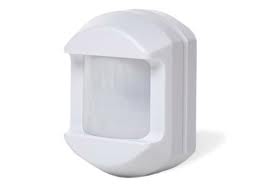
There is definitely some mystery surrounding motion sensors. They are a core element of most alarm systems and a standard feature ion our Smart, Safe Home package. So, let’s dig into what they really do.

Motion sensors detect and report motion – in most cases when nobody is home (Armed-Away). That’s why they are not “awake” when you arm your system for the night (Armed-Stay) . It’s usually not practical to put a sensor on every window, and you usually don’t need to, since you can use motion sensors and glass break detectors to get the protection you need more affordably. Plus, motion sensors have come a long way from the original models – much more reliable, and less prone to false alarms.

How do they work?

The early motion sensors were considered “active” devices, because they emitted energy (microwave or ultrasonic) to see what was happening around them. There are some still some microwave sensors being installed in commercial spaces. Today the most common motion sensor uses Passive Infra-Red energy to detect heat given off by people (and animals!) – hence the name “PIR” given to the device. The smart detectors look for objects warmer than the normal background temperature, using a special lens to create “beams” of passive energy, and then look for motion: when the sensor detects a “warm” object moving across several beams within a specified time frame – that trips the alarm.

Where do you use them?

The standard range is 30-35 feet, and the coverage area is shaped like a large water droplet, with the skinny part at the detector. The ideal spot for a motion sensor is in a high-traffic area that an intruder would cross if moving about in your home or business: think hallways, living rooms with big-screen TV, etc. The sensors work better when people move across the beams, as opposed to approaching the sensor directly. The beams project out and down, to pick up anyone trying to avoid detection by crawling.

Motion sensors and pets

Today’s sensors are usually “pet-friendly” up to 40 pounds, which means they “ignore” cats and small dogs – unless your Siamese is downright acrobatic! That means that large dogs with the run of the house all day and night make it harder to use motion sensors – unless you kennel them!

 Things to Remember

Manufacturers recommend careful placement of their products to prevent false (non-intruder caused) alarms. They suggest mounting the PIDs in such a way that the PIR cannot ‘see’ out of a window. Although the wavelength of infrared radiation to which the chips are sensitive does not penetrate glass very well, a strong infrared source such as from a vehicle headlight or sunlight reflecting from a vehicle window can overload the chip with enough infrared energy to fool the electronics and cause a false alarm. A person moving on the other side of the glass however would not be ‘seen’ by the PIR.

They also recommended that the PIR not be placed in such a position that an heating and air conditioning vent would blow hot or cold air onto the surface of the plastic which covers the housing’s window. Although air emits very small amounts of infrared energy, the air blowing on the plastic window cover could change the plastic’s temperature enough to, once again, fool the electronic

Specifications

Based on the latest in infrared technology, the Burns & McBride motion detector comes with three different mounting brackets and a 90° lookdown, ensuring intruders cannot pass by unnoticed. It also communicates directly with tyour Burns & McBride Go!Control panel, so if the detector is triggered, the panel will connect you to the central monitoring station in as few as 17 seconds.

Dimensions and weight
  • Width: 2.5″
  • Height: 3.2″
  • Depth: 1.9″
  • Weight (including battery and brackets): 3.7 oz. (104.9 g)

Regulatory Listing(s)

  • ETL, FCC Part 15, Industry Canada
Features
  • 90° lookdown
  • 110° wide-angle spread
  • Three different mounting brackets
  • 30’x50′ range
  • 33–55 lb. pet immune
  • Five-year lithium battery
  • Tamper-protected
Benefits
  • 90° lookdown: Ensure that no one can walk beneath your sensor undetected
  • Tamper–proof: Know when someone is trying to tamper with your alarm
  • Fully monitored: Get connected to the Burns & McBride central monitoring station in as few as 17 seconds
Radio
  • Wireless signal range
  • 350 ft., open air, with 2GIG Wireless Alarm Control Panel
  • Transmitter Frequency
  • 345.000 MHz (crystal controlled)
  • Transmitter Frequency Tolerance
  • ± 15 kHz
  • Transmitter Bandwidth
  • 24 kHz
  • Modulation Type
  • Amplitude Shift Keying—On/Off Keying (ASK-OOK)
  • Peak Field Strength
  • Typical 50,000 uV/m at 3m
Housing
  • Material
  • ABS plastic and poly-carbonate
  • Color
  • White
  • Operating temperature
  • 32° to 120°F (0° to 49°C)
  • Relative Humidity
  • 5-95% Non-Condensing
  • Unique ID Codes
  • Over one (1) million different code combinations
  • Supervisory Interval
  • 70 minutes
Warranty
  • Lifetime
Included equipment and accessories
  • Battery (installed)
  • Two (2) Panasonic CR2032, or equivalent Lithium batteries
  • Included Accessories
  • Mounting brackets, two (2) long Phillip’s head screws, two (2) plastic wall anchors, magnet

For more information on this exciting product call us at 302-656-5110 or visit our website at http://www.burnsandmcbride. Finally you might want to follow our blog at http://www.burnsandmcbrideblog.com. Just as Smartphones are adding applications and changing every day so to with the technology behind our Smart, Safe home system. Our blog explains some of the constantly changing things that are happening in the industry and we hope that you find it informative.

Leave a comment

Filed under Home Safety, Home Security, Home Security 101, How Things Work, Uncategorized

Home Security 101 – What is a Door/Window Sensor?


Every monitored home alarm system starts with the wireless door/window sensor. Your basic Smart/Safe Home package contains three of them. The technology goes back almost a hundred years, and over a hundred million of these devices are in use, with over a million more installed every year, just in US homes. There’s an excellent reason why this device is the core of any good alarm system: intruders invariably try to enter through a door first. Burglary entry stats look like this:

  • 34% of burglars enter through the front door
  • 26% enter through a back or basement door
  • 9% enter through the garage

That’s almost three quarters of all burglaries starting with a door – now you see why the layout of every good home alarm system starts with exterior doors  The intruder wants an easy entry- and a fast and easy exit, ideally with an armload of your stuff.

How the Door/Window Sensor Works

The standard door sensor is a battery powered magnetic switch and consists of two small parts: one part mounts on the top of the door frame (on the opposite side from the hinge), and the smaller part (the magnet) is placed in close proximity on the door itself. When the door is shut, the two pieces are within a half inch of each other, and your alarm system can be armed. When the door opens, and the pieces are separated, that triggers the alarm. It’s simple, and it works like a charm. . There are even recessed door/window sensor sif you don’t want to see the sensors at all. Here are some more telling stats:

  • 12% of burglaries occur through an unlocked door.
  • 41% of burglaries in homes with alarm systems occur when the security system is not turned on.

Each home is different and you may want to add more than three to your system. Your Burns & McBride Smart Safe Home System is easy to add additional sensors to.

In addition to sending emergency notifications for break ins, these units can also be programmed to send you messages if items such as liquor cabinets are opened while you are way.

Specifications
Magnet dimensions
  • Width: 0.435″
  • Height: 1.3″
  • Depth: 0.312″
Sensor dimensions and weight
  • Width: 1.03″
  • Height: 2.59″
  • Depth: .49″
  • Weight (including battery and magnet): 1.1 oz. (31.2 g)

Regulatory Listing(s)

  • ETL, FCC Part 15, Industry Canada
Features
  • Fully supervised
  • Five-year lithium battery
  • Tamper–proof
  • Reed sensitivity: 0.625″ minimum gap, 0.85″ typical
Benefits
  • Non-emergency alerts: Protect what matters—attach the contacts to liquor closets, gun cabinets or even treat drawers and get alerted by text message when they are opened
  • Small gap alert: Feel secure knowing that the smallest opening will trigger an alarm— the door or window has to be open less than inch before you are alerted or the alarm sounds
  • Fully monitored: Get connected to the Burns & McBride central monitoring station in as few as 17 seconds
  • Tamper–proof: Know when someone is trying to tamper with your alarm
Radio
  • Wireless signal range
  • 350 ft., open air, with 2GIG Wireless Alarm Control Panel
  • Transmitter Frequency
  • 345.000 MHz (crystal controlled)
  • Transmitter Frequency Tolerance
  • ± 15 kHz
  • Transmitter Bandwidth
  • 24 kHz
  • Modulation Type
  • Amplitude Shift Keying—On/Off Keying (ASK-OOK)
  • Peak Field Strength
  • Typical 36,000 uV/m at 3m
Housing
  • Material
  • ABS plastic
  • Color
  • White
  • Operating temperature
  • 32° to 120°F (0° to 49°C)
  • Relative Humidity
  • 5-95% Non-Condensing
  • Unique ID Codes
  • Over one (1) million different code combinations
  • Supervisory Interval
  • 70 minutes
Warranty
  • Lifetime
Included equipment and accessories
  • Battery (installed)
  • Two (2) Panasonic CR2032, or equivalent Lithium batteries
  • Included Accessories
  • Two (2) Phillip’s flat-head screws, one (1) two-pin connector with a 12″ flying 2-wire lead, adhesive strip

For more information on this exciting product call us at 302-656-5110 or visit our website at http://www.burnsandmcbride. Finally you might want to follow our blog at http://www.burnsandmcbrideblog.com. Just as Smartphones are adding applications and changing every day so to with the technology behind our Smart, Safe home system. Our blog explains some of the constantly changing things that are happening in the industry and we hope that you find it informative.

Leave a comment

Filed under Home Safety, Home Security, Home Security 101, How Things Work, Uncategorized